Technology has always been a driving force behind human progress. From the invention of the wheel to the rise of artificial intelligence, technological innovation shapes the way we live, work, and communicate. In this blog, we will explore the history of technology, the major breakthroughs that define our era, the transformative impact on society, and a look ahead at what the future may hold.
The Early Beginnings of Technology
Technology is often associated with modern innovations like smartphones or AI, but its roots trace back thousands of years. Early humans developed tools from stone, wood, and bone, laying the foundation for survival and societal growth. The discovery of fire was one of the most revolutionary technological advancements of early humanity, providing warmth, protection, and a means to cook food.
The agricultural revolution, around 10,000 years ago, marked another leap in technology. Humans learned to cultivate crops and domesticate animals, leading to permanent settlements and the rise of civilizations. Simple tools evolved into more complex machinery, including plows, irrigation systems, and early metalworking techniques. These innovations paved the way for organized societies and laid the groundwork for future technological progress.
Industrial Revolution: Technology Transforms Society
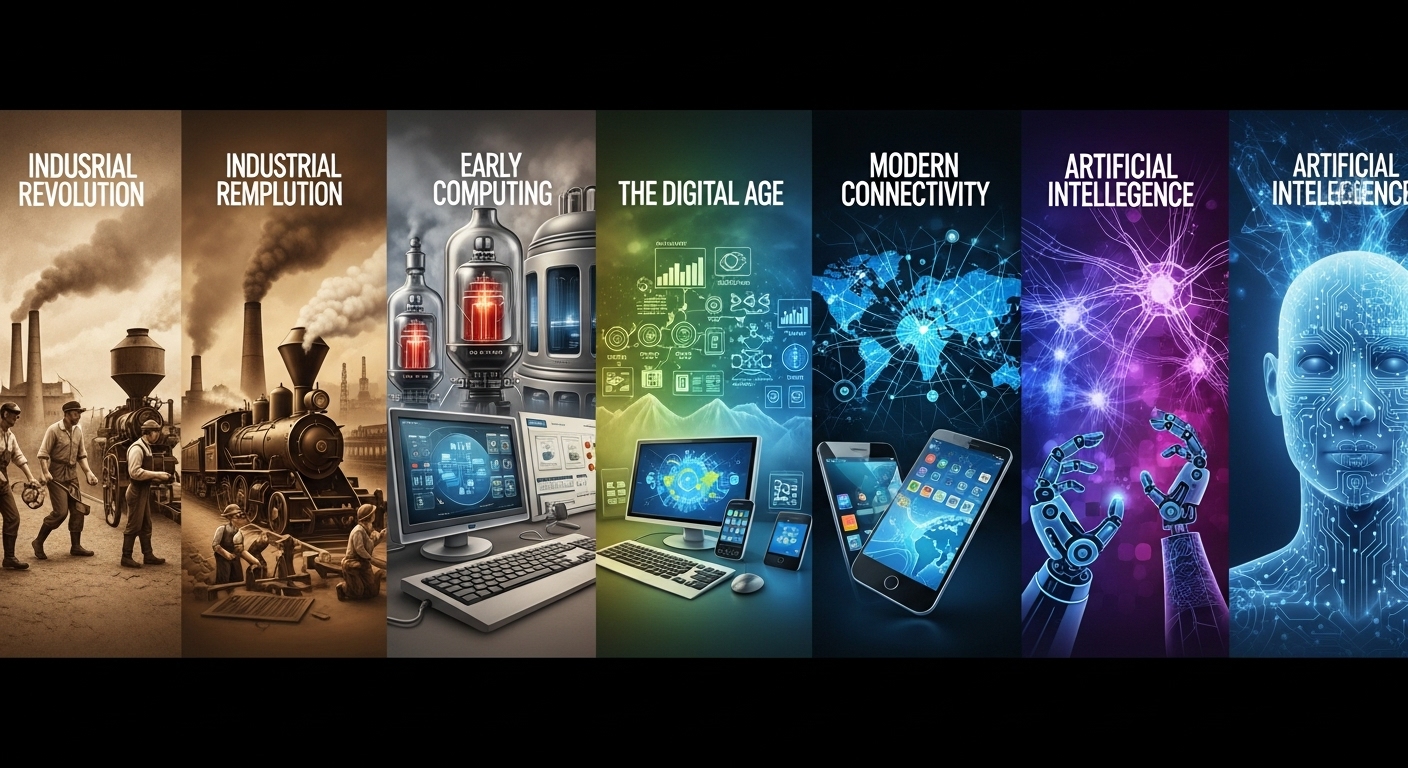
The Industrial Revolution, beginning in the late 18th century, was a turning point in the history of technology. Steam engines, mechanized textile production, and improved transportation reshaped economies and societies. Factories replaced manual labor, and urbanization accelerated as people moved to cities for work.
This era also introduced mass production techniques, which allowed goods to be manufactured on a scale previously unimaginable. The rise of railways and steamships connected distant regions, facilitating trade and cultural exchange. The Industrial Revolution demonstrated that technology could transform not only production but also the very fabric of society.
The Digital Revolution: Computers and Connectivity
The 20th century saw another seismic shift: the advent of computers and digital technology. Early computers were massive machines used primarily for scientific and military calculations. Over time, innovations in microprocessors and semiconductors made computing power accessible to businesses and eventually individuals.
The invention of the internet further revolutionized technology. What began as a network for sharing research evolved into a global communication platform. Social media, e-commerce, and cloud computing transformed how people interact, work, and consume information. The digital revolution blurred geographic boundaries and created a new era of globalization driven by information technology.
Artificial Intelligence: Machines That Think
Artificial intelligence (AI) represents the current frontier of technological innovation. Unlike traditional software that follows pre-programmed rules, AI systems can learn, adapt, and make decisions based on data. Machine learning, a subset of AI, enables computers to improve performance over time without explicit programming.
AI applications are vast and growing. In healthcare, AI algorithms assist in diagnosing diseases, predicting patient outcomes, and even discovering new drugs. In finance, AI helps detect fraud, manage risk, and optimize investments. Autonomous vehicles, natural language processing, and recommendation systems are just a few examples of AI transforming industries and daily life.
The Internet of Things: A Connected World
The Internet of Things (IoT) extends the digital revolution into the physical world. IoT refers to networks of connected devices that collect and exchange data. From smart homes to industrial sensors, IoT technology enhances efficiency, convenience, and decision-making.
In cities, IoT devices monitor traffic flow, energy usage, and environmental conditions, enabling smarter urban planning. In agriculture, sensors track soil moisture, weather patterns, and crop health, helping farmers optimize yields. The integration of IoT into everyday life reflects a shift toward an increasingly interconnected world where data drives innovation.
Cybersecurity: Protecting the Digital Era
As technology becomes more pervasive, the importance of cybersecurity grows. Cyber threats, including hacking, phishing, and ransomware, pose significant risks to individuals, businesses, and governments. Protecting digital infrastructure requires robust security measures, including encryption, multi-factor authentication, and constant monitoring.
Beyond technical solutions, cybersecurity also involves fostering awareness and responsible behavior among users. The digital era has created immense opportunities, but it has also made privacy and security critical concerns for society at large.
Blockchain and Decentralization
Blockchain technology has emerged as a transformative force in finance, supply chain management, and beyond. At its core, blockchain is a decentralized, immutable ledger that records transactions securely and transparently. Cryptocurrencies like Bitcoin popularized blockchain, but the technology’s potential extends far beyond digital currency.
Smart contracts, decentralized applications, and secure identity systems are just a few examples of blockchain’s impact. By reducing reliance on central authorities, blockchain enables trust and transparency in a wide range of industries. As adoption grows, blockchain may redefine how business and governance operate in the digital age.
Emerging Technologies: Shaping the Next Decade
The pace of technological innovation shows no signs of slowing. Several emerging technologies are poised to reshape the next decade:
- Quantum Computing: Quantum computers leverage quantum mechanics to solve complex problems exponentially faster than classical computers. This technology could revolutionize fields such as cryptography, material science, and drug discovery.
- Augmented and Virtual Reality: AR and VR are transforming entertainment, education, and training. Immersive experiences allow users to interact with digital content in entirely new ways.
- Biotechnology: Advances in genetic engineering, synthetic biology, and personalized medicine are redefining healthcare and human potential. CRISPR technology, for example, enables precise editing of genes to combat genetic disorders.
- Sustainable Technology: Climate change has driven innovation in renewable energy, energy storage, and sustainable materials. Technology is crucial in creating a more sustainable future for our planet.
Technology and Society: Opportunities and Challenges
While technology offers enormous benefits, it also presents challenges. Automation and AI can disrupt labor markets, creating economic inequality if not managed carefully. Social media platforms, while connecting people, also raise concerns about privacy, misinformation, and mental health.
Education and adaptability are key to navigating this rapidly changing landscape. Lifelong learning and digital literacy will empower individuals to thrive in a technology-driven world. Governments, businesses, and civil society must work together to ensure that technological progress benefits society as a whole.
The Ethical Dimension of Technology
Ethical considerations are increasingly central to technological development. AI bias, data privacy, and surveillance raise questions about fairness and accountability. Developers and policymakers must consider not only what technology can do but also what it should do.
Ethical frameworks guide the responsible deployment of technology. Transparency, inclusivity, and accountability are essential principles for ensuring that innovation aligns with societal values. As technology becomes more powerful, ethical responsibility grows in equal measure.
Looking Ahead: The Future of Technology
The future of technology promises both excitement and uncertainty. Trends such as AI, IoT, blockchain, and quantum computing will continue to evolve and intersect in unforeseen ways. The fusion of technologies may lead to breakthroughs in healthcare, climate mitigation, transportation, and human augmentation.
Society will face complex questions about governance, ethics, and equity. How do we balance innovation with privacy? How do we ensure that technology benefits everyone, not just a select few? The answers will shape the trajectory of human progress in the decades to come.
One thing is certain: technology will remain a defining force in our lives. Those who understand, adapt to, and harness its potential will thrive, while those who ignore it risk being left behind. As individuals, businesses, and societies, embracing technology responsibly is not just an opportunity—it is a necessity.
Conclusion
Technology is more than a collection of tools and machines; it is a reflection of human ingenuity and aspiration. From the earliest stone tools to the latest advances in AI and quantum computing, technology has continually reshaped the world.
By understanding its history, exploring its present applications, and anticipating future developments, we gain insight into the power and responsibility that come with innovation. The evolution of technology is not just a story of progress—it is a story of humanity itself.
As we move forward, we must embrace the possibilities of technology while remaining mindful of its impact on society, ethics, and the environment. In doing so, we ensure that the future of technology is not only advanced but also equitable, sustainable, and human-centered.