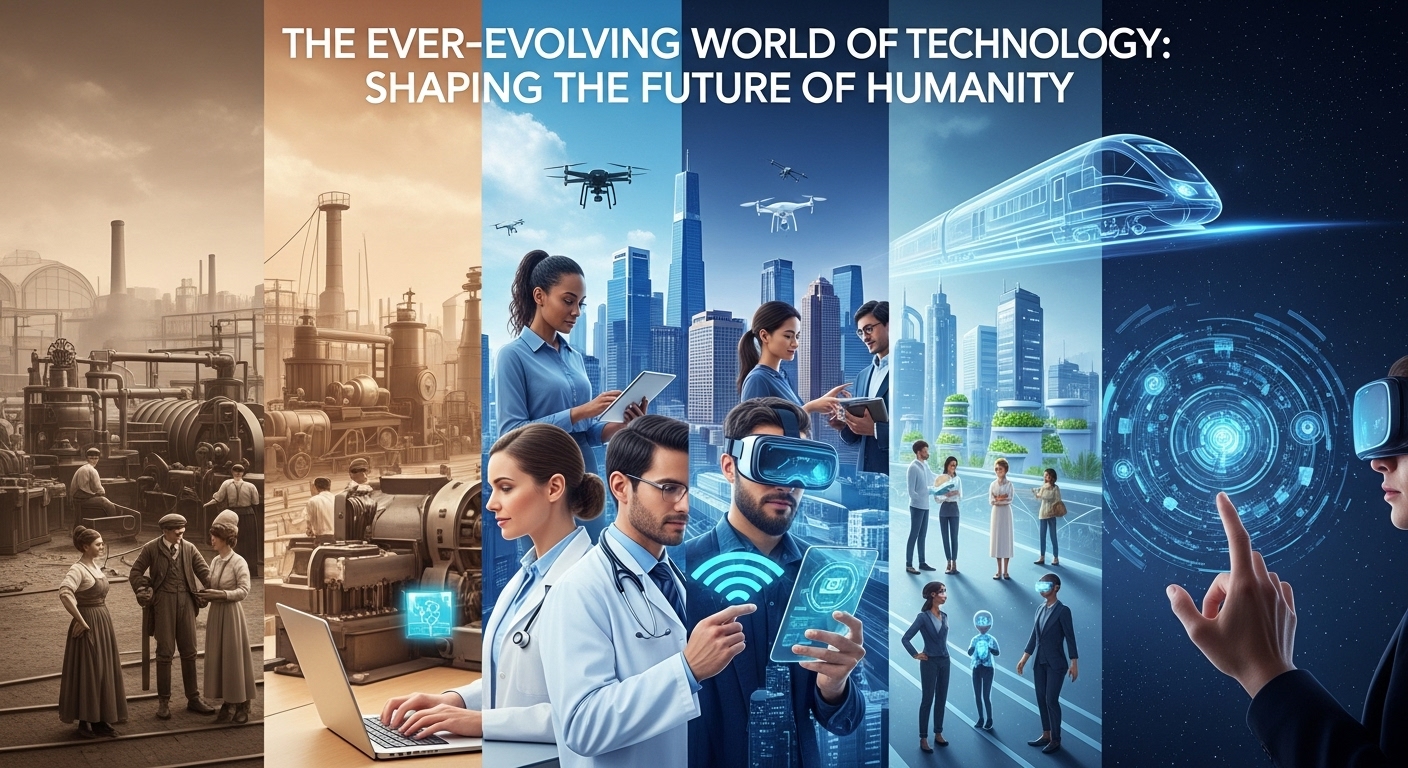
Technology has always been the driving force behind human progress. From the invention of the wheel to the rise of artificial intelligence, each leap has reshaped how we live, work, and think. The twenty-first century has seen a pace of innovation faster than ever before, transforming the global landscape in ways that were once the stuff of science fiction. This blog explores how technology has evolved, how it continues to influence our lives, and what the future might hold.
The Roots of Human Innovation
Technology did not begin with computers or electricity. It began with the first humans who learned to make tools from stone and wood. These early inventions were not glamorous, but they marked the beginning of human ingenuity. The discovery of fire was one of the earliest technological milestones, allowing people to cook food, stay warm, and fend off predators.
As societies evolved, so did their tools. The invention of the wheel around 3500 BCE transformed transportation and agriculture. Civilizations in Mesopotamia, Egypt, and China created irrigation systems, writing, and metal tools that improved productivity and communication. Technology became a cornerstone of progress, enabling trade and cultural exchange across continents.
The Industrial Revolution: The Age of Machines
The Industrial Revolution of the eighteenth and nineteenth centuries was one of the most transformative periods in human history. It marked the shift from manual labor to machine-driven manufacturing. Steam engines powered factories, trains, and ships, revolutionizing transportation and industry. Textile mills, ironworks, and mechanized looms changed economies forever.
For the first time, humans harnessed energy on a massive scale. The discovery of electricity and the invention of the telegraph opened new paths for communication. The telephone followed, allowing voices to travel across cities and continents. This period also saw the birth of urbanization, as people left rural farms to work in factories. The world was becoming interconnected in ways never seen before.
However, the Industrial Revolution also brought challenges. Pollution, poor working conditions, and economic inequality grew alongside technological progress. Yet even with these problems, the foundation for modern technology was laid. Machines had become part of human identity.
The Twentieth Century: The Digital Dawn
The twentieth century marked the beginning of a new technological era—the age of information. Electricity became common in homes, automobiles became affordable, and airplanes connected continents. But it was the invention of the computer that truly redefined human potential.
In the 1940s, the first electronic computers were massive machines that filled entire rooms. They were slow and limited, but they could perform calculations faster than any human. These early computers were soon followed by smaller, more efficient models as transistors replaced vacuum tubes. By the 1970s, microprocessors made it possible to create personal computers that anyone could use.
The 1980s and 1990s saw the birth of the digital revolution. Computers entered homes, offices, and schools. The internet emerged as a global network, transforming communication, education, and business. Email replaced letters, websites became the new libraries, and online services began to shape everyday life.
During this time, mobile technology also advanced rapidly. The first cell phones were bulky and expensive, but they paved the way for the smartphones of today. Digital cameras, gaming consoles, and early artificial intelligence systems began to appear. The world was entering a connected age where information flowed freely and instantly.
The Internet Age: A Connected World
The twenty-first century began with the internet as the center of human activity. Technology moved from being a tool to becoming an environment in which we live. Social media platforms emerged, allowing people to share thoughts, photos, and experiences in real time. Businesses adapted to digital spaces, and new industries like e-commerce, streaming, and online education flourished.
The rise of search engines made knowledge accessible to anyone with an internet connection. Suddenly, the world’s information was at everyone’s fingertips. The digital divide began to close as mobile devices became cheaper and more widespread. Even in remote regions, smartphones provided access to communication and opportunity.
The growth of cloud computing allowed individuals and companies to store data online instead of on local machines. This innovation made collaboration easier and faster. Entire businesses began operating remotely, and digital entrepreneurship became possible for millions.
Technology also transformed entertainment. Music, films, and games moved online, and streaming services replaced physical media. Virtual communities and online influencers reshaped culture, politics, and marketing. The internet became not just a network but a living ecosystem of human creativity.
The Rise of Artificial Intelligence
Artificial intelligence (AI) represents one of the most significant technological breakthroughs of the modern age. Once confined to science fiction, AI is now an essential part of daily life. From voice assistants and recommendation systems to autonomous vehicles and medical diagnostics, AI has changed the way the world operates.
AI is not just about machines performing tasks; it is about machines learning and improving over time. Machine learning algorithms analyze vast amounts of data, finding patterns that humans might miss. This capability powers predictive analytics, facial recognition, and language translation systems.
In the healthcare industry, AI helps doctors detect diseases earlier and with greater accuracy. In finance, algorithms predict market trends and detect fraud. In education, personalized learning systems adapt lessons to individual students. Even art and music are being transformed, as AI-generated works challenge our ideas about creativity.
However, AI also raises ethical questions. Issues such as data privacy, bias, and automation-driven unemployment have become central to discussions about the future of technology. As AI grows more capable, society must decide how to use it responsibly and fairly.
The Mobile Revolution
One of the most profound shifts in recent decades has been the rise of mobile technology. Smartphones are now more powerful than the computers that once sent astronauts to the moon. They have become indispensable tools for communication, entertainment, and productivity.
The mobile revolution has democratized technology. People can now bank, shop, learn, and work using only a handheld device. Apps have become the new gateways to the digital world, offering everything from social interaction to health monitoring.
The integration of GPS technology has made location-based services possible, from ride-sharing apps to navigation tools. Mobile payments have reduced the need for cash, and wearable devices have brought technology even closer to the body. Smartwatches and fitness trackers monitor health in real time, promoting wellness and early detection of medical issues.
The smartphone era also symbolizes a cultural shift. People are constantly connected, sharing experiences instantly. While this connectivity has many benefits, it also poses challenges such as digital addiction, loss of privacy, and reduced face-to-face interaction. Society is still learning how to balance convenience with well-being in this hyperconnected world.
Cloud Computing and Big Data
As technology evolved, data became the new fuel of the digital economy. Every online interaction generates information—clicks, searches, purchases, and messages—that can be analyzed for insights. This explosion of data led to the rise of big data analytics and cloud computing.
Cloud computing changed how businesses operate. Instead of maintaining physical servers, organizations now use online infrastructure to store and process data. This shift has made computing more flexible and cost-effective. Companies can scale their operations instantly and collaborate across borders.
Big data allows decision-makers to understand trends and behaviors at unprecedented depth. From predicting consumer preferences to improving public health, data-driven insights are transforming industries. Governments use data analytics for urban planning and environmental protection, while scientists rely on it for research in genetics, climate modeling, and astronomy.
Yet, with great power comes great responsibility. Data security and privacy have become major concerns. Cyberattacks, identity theft, and misuse of personal data highlight the need for stronger protections and ethical standards.
The Internet of Things: A Smart Planet
The Internet of Things (IoT) extends the reach of the internet beyond computers and phones to everyday objects. Smart devices such as thermostats, refrigerators, and cars can now communicate with each other through embedded sensors and networks. This interconnected system creates a world where physical and digital realities merge seamlessly.
In homes, IoT enables automation and efficiency. Lights adjust automatically, doors lock remotely, and appliances optimize energy usage. In cities, IoT supports smart infrastructure that manages traffic, waste, and utilities in real time. In agriculture, connected sensors monitor soil conditions and weather to improve crop yields.
Industrial IoT has revolutionized manufacturing and logistics. Machines can predict when they need maintenance, reducing downtime and costs. Supply chains have become more transparent and efficient through real-time tracking.
However, the widespread adoption of IoT also introduces risks. Each connected device can become a potential entry point for cyber threats. Balancing innovation with security is one of the biggest challenges of the IoT era.
Biotechnology and Human Enhancement
Technology is no longer limited to machines; it now extends into the biology of life itself. Biotechnology has made extraordinary progress in recent years, reshaping medicine, agriculture, and even human potential. Genetic engineering, stem cell research, and personalized medicine are pushing the boundaries of what it means to be human.
Advances like CRISPR have made gene editing more precise and affordable. Scientists can now correct genetic disorders, enhance crop resilience, and even explore possibilities of life extension. In healthcare, wearable devices and implants continuously monitor vital signs, allowing doctors to predict illnesses before they become critical.
The merging of technology and biology also raises profound ethical questions. Should humans enhance their abilities through technology? Where do we draw the line between healing and upgrading? These questions will shape the moral landscape of the future as much as they shape the scientific one.
The Future: Quantum Computing and Beyond
As we look ahead, the next frontier of technology may lie in quantum computing. Unlike classical computers that process information in binary form, quantum computers use quantum bits, or qubits, which can exist in multiple states at once. This allows them to perform complex calculations far beyond the reach of traditional systems.
Quantum computing could revolutionize fields such as cryptography, materials science, and artificial intelligence. Problems that would take classical computers thousands of years to solve could be completed in seconds. However, the technology is still in its early stages, facing challenges in stability and scalability.
Beyond quantum computing, the future may bring innovations we can barely imagine. Space exploration, renewable energy breakthroughs, brain-computer interfaces, and advanced robotics are already taking shape. As these technologies mature, they will redefine the limits of human potential and challenge our understanding of reality itself.
The Human Side of Technology
While machines grow smarter, humans must grow wiser. The greatest challenge of the technological age is not creating new tools but using them responsibly. Technology shapes society, but society also shapes technology. The values we embed in our creations determine whether they become instruments of progress or sources of harm.
Education is key to navigating this new world. Digital literacy, ethical awareness, and critical thinking must become central to learning. People need to understand not just how technology works, but how it affects them psychologically, socially, and culturally.
There is also a growing need to ensure that technological progress benefits everyone. Bridging the digital divide, protecting privacy, and creating fair opportunities for all are essential goals. Technology should empower, not exploit.
Conclusion: Embracing the Future with Wisdom
The story of technology is the story of humanity itself—a story of curiosity, creativity, and courage. From the first spark of fire to the dawn of artificial intelligence, each invention has expanded the boundaries of what we can do and who we can be. Yet with every leap forward comes responsibility.
As we move deeper into the digital age, we must remember that technology is not destiny. It is a tool, and the choices we make will determine its impact on our world. Whether we build a future of equality and enlightenment or one of division and dependency depends on how we wield our creations.
The evolution of technology is far from over. In many ways, it is just beginning. The challenge for humanity is not just to keep up with technology, but to ensure that technology keeps up with our humanity.