The gaming industry has undergone many transformations over the decades, moving from simple arcade machines to complex home consoles and high-performance PCs. The latest development shaping the future of gaming is cloud gaming, a technology that promises to make high-quality games accessible to anyone with a stable internet connection, regardless of their hardware. To understand how cloud gaming works, it is important to look at its foundations, the technology behind it, and the impact it is already having on players and the gaming industry as a whole.
The Concept of Cloud Gaming
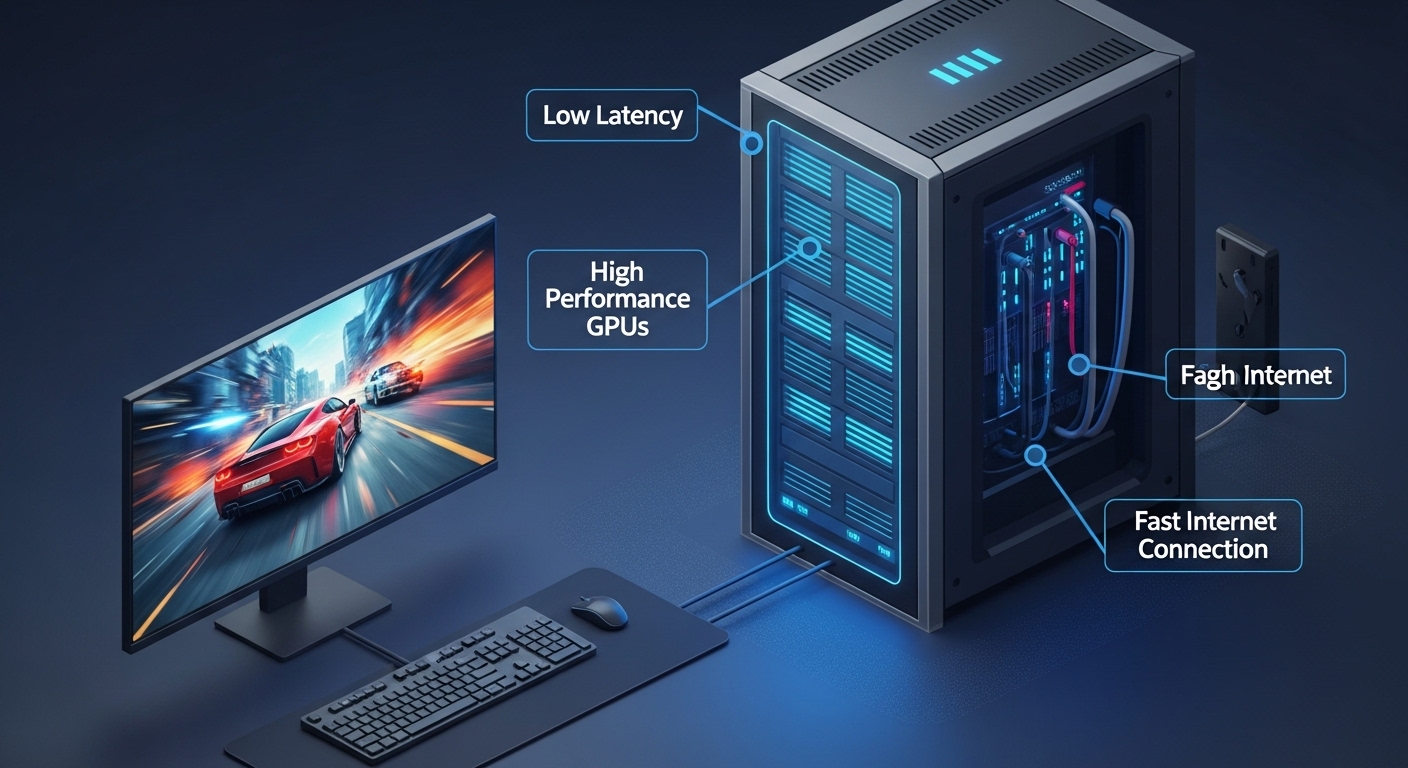
Cloud gaming is often described as the Netflix of video games. Instead of buying a physical copy or downloading a digital version of a game to a console or PC, players stream the game from remote servers. These servers, located in powerful data centers, handle all the heavy processing required to run modern games. What the player sees is essentially a live video feed of the game that they control in real time.
This concept removes the need for expensive gaming hardware since the device used only has to display the video feed and send inputs back to the server. Cloud gaming makes it possible to play advanced games on devices that were never designed for gaming, such as tablets, low-end laptops, or even smartphones.
The Role of Data Centers
At the core of cloud gaming lies the data center. These facilities house racks of powerful servers equipped with high-end processors, graphics cards, and cooling systems designed to run multiple game sessions simultaneously. Each player connecting to the cloud gaming service essentially uses a virtual machine within the data center to run their game.
The geographical location of these data centers plays a crucial role in the user experience. The closer a player is to the data center, the lower the latency, which is the delay between the player’s action and the game’s response. This is why cloud gaming companies invest heavily in expanding their server networks around the world.
Game Streaming Technology
The process of cloud gaming is made possible through advanced video streaming technology. When a player presses a button or moves a joystick, that input is sent through the internet to the server. The server processes the input, updates the game state, and streams back the updated video frames to the player’s device.
This requires the use of high-efficiency video compression to ensure that the stream is smooth and responsive. Codecs, which are algorithms designed to encode and decode video, play a critical role here. They compress video data so it can be transmitted quickly without overwhelming the player’s internet bandwidth. Modern codecs are highly optimized to balance image quality with minimal delay.
Latency and Its Challenges
Latency is one of the biggest challenges in cloud gaming. Even the smallest delay between a player pressing a button and seeing the result on screen can affect the experience. In fast-paced genres like first-person shooters or racing games, low latency is critical.
To minimize latency, cloud gaming providers employ techniques like predictive input, which anticipates a player’s actions, and adaptive streaming, which adjusts video quality in real time based on the user’s connection. Additionally, the spread of high-speed internet technologies such as fiber optics and 5G networks is helping reduce latency to levels acceptable for gaming.
Bandwidth Requirements
Cloud gaming relies on stable and high-speed internet connections. A game streamed in high resolution, such as 1080p or 4K, requires a significant amount of bandwidth. For example, playing at 4K resolution with high frame rates may require more than 30 megabits per second of internet speed. If a connection is unstable or too slow, the player may experience lag, frame drops, or reduced image quality.
This makes cloud gaming heavily dependent on the development of broadband infrastructure. While urban areas in developed countries may already have the speeds required, players in rural or underdeveloped regions may face difficulties accessing these services.
Cloud Gaming Platforms
Several companies are investing in cloud gaming, each offering unique platforms. While the exact business models vary, the core idea remains the same: stream games directly to players without the need for downloads or installations. Some platforms focus on subscription services, where users pay a monthly fee for access to a library of games, while others allow players to purchase games individually and play them on the cloud.
These platforms also experiment with cross-device compatibility. A player might start a game on their PC, continue it on a smartphone during a commute, and finish it on a smart TV at home. This seamless transition is one of the most attractive features of cloud gaming.
The Role of 5G in Cloud Gaming
The rollout of 5G networks is expected to accelerate the adoption of cloud gaming. With higher bandwidth and lower latency than previous mobile networks, 5G provides the conditions necessary for smooth gameplay on mobile devices. For players without access to high-speed wired internet, 5G offers a viable alternative that can deliver the responsiveness required for cloud gaming.
Furthermore, 5G enables gaming on the go, allowing players to enjoy high-quality experiences without being tied to Wi-Fi connections. This mobility is likely to make cloud gaming more popular among younger players who prefer playing on smartphones and tablets.
Cost and Accessibility Advantages
One of the main advantages of cloud gaming is cost. Traditional gaming often requires expensive consoles or high-end PCs, which can be a barrier for many people. With cloud gaming, the need for powerful hardware is eliminated since the heavy lifting is done on the server side. Players only need a device capable of streaming video and a good internet connection.
This accessibility opens gaming to a wider audience. Schools, community centers, and households without gaming equipment can still access high-quality games. It also makes it easier for developers to reach new players, expanding the gaming market overall.
Challenges Facing Cloud Gaming
Despite its promise, cloud gaming faces significant challenges. Internet speed and stability remain the biggest hurdles, as not all regions have the infrastructure to support it. Data usage is another concern, as streaming games consumes a large amount of data, which may not be affordable for users with limited data plans.
Another challenge is competition with traditional gaming hardware. Many gamers still prefer owning physical consoles or PCs for reliability and offline access. Cloud gaming services must offer compelling reasons, such as affordability and convenience, to convince players to make the switch.
Security and Privacy Concerns
Like any online service, cloud gaming raises questions about security and privacy. Since games and player data are stored on remote servers, protecting them from hacking and unauthorized access is critical. Cloud providers must ensure strong encryption, secure account management, and data protection measures to build trust among users.
Additionally, privacy concerns arise from the amount of data collected, such as play habits, performance metrics, and personal information. Clear policies and transparency are needed to ensure players feel comfortable using these services.
Impact on Game Development
Cloud gaming is influencing how games are developed. Developers no longer have to design games around the limitations of specific hardware, since the processing is done on powerful servers. This allows for more ambitious projects with advanced graphics and physics.
Furthermore, cloud gaming services can offer unique features, such as massive multiplayer experiences where thousands of players interact in real time, something difficult to achieve on local hardware. Developers are also experimenting with integrating cross-platform play, making it easier for people on different devices to play together.
Integration with Other Technologies
Cloud gaming is also converging with other technologies. Virtual reality and augmented reality can be enhanced by the power of cloud computing, reducing the need for bulky equipment by streaming VR content from servers. Artificial intelligence is being integrated into cloud gaming platforms to optimize performance, personalize game recommendations, and even assist in game design.
These integrations create possibilities beyond traditional gaming, turning cloud platforms into versatile ecosystems for entertainment, social interaction, and education.
The Future of Cloud Gaming
The future of cloud gaming looks promising, with major investments being made in infrastructure, platforms, and game development. As internet speeds improve and costs decrease, more players will embrace the convenience and accessibility it offers. The potential to make gaming as simple as pressing play on a movie has the power to reshape the entire industry.
In the coming years, cloud gaming may reduce the reliance on physical consoles and downloads, making gaming more like a utility available on demand. This could fundamentally change the way people view and access video games, turning them into a universal form of entertainment accessible anywhere, anytime.
Conclusion
Cloud gaming represents one of the most transformative shifts in the history of gaming. By leveraging powerful servers, advanced streaming technology, and global networks, it makes high-quality games accessible on virtually any device. While challenges such as latency, bandwidth, and infrastructure remain, ongoing advancements in internet technology, particularly 5G, are steadily addressing these issues.
Understanding how cloud gaming works reveals the potential it holds not only for players but also for the entire gaming industry. It reduces costs, broadens accessibility, and allows developers to push the boundaries of creativity without being restricted by hardware limitations. As technology continues to evolve, cloud gaming is likely to become an essential part of the gaming ecosystem, shaping the way future generations play, connect, and experience interactive entertainment.