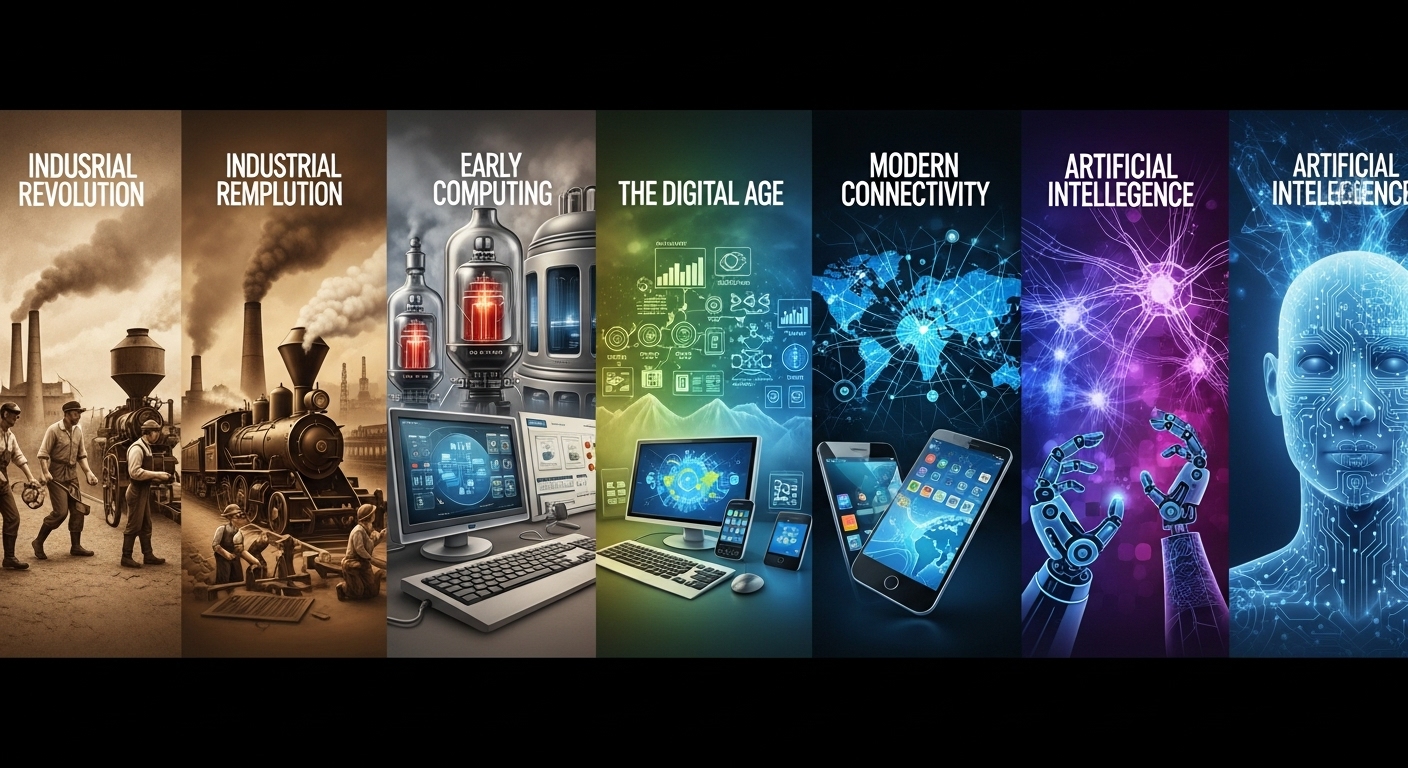

In an era of rapid technological advancements, we find ourselves on the cusp of a new age—one driven by cutting-edge innovations that are transforming the way we live, work, and interact with the world. From artificial intelligence to blockchain, the landscape of technology is evolving at a pace never seen before. As we look ahead, these breakthroughs promise to shape not only industries but entire societies. In this blog post, we’ll explore some of the most exciting and transformative tech trends that are poised to redefine our future.
Artificial Intelligence: Pushing the Limits of Human Potential
Artificial intelligence (AI) is no longer a concept limited to science fiction. It has become a driving force across many industries, influencing everything from healthcare to entertainment. What makes AI so revolutionary is its ability to mimic human intelligence and even surpass it in specific domains, such as data analysis, decision-making, and pattern recognition.
In healthcare, AI algorithms are already aiding in the diagnosis of diseases like cancer and cardiovascular conditions, improving accuracy and efficiency. For businesses, AI is transforming customer service through chatbots, enhancing personalization through targeted marketing, and optimizing supply chains for greater productivity. But beyond these applications, AI is also making strides in creative fields, such as art and music, where machine learning is being used to generate original content.
The future of AI holds vast potential, but it also raises questions around ethics, job displacement, and the societal implications of machines making decisions that were once left to humans. As we continue to integrate AI into our lives, it will be essential to ensure it serves as a tool for progress while addressing its challenges head-on.
Quantum Computing: Revolutionizing Problem-Solving
Quantum computing represents the next frontier in computing power. While traditional computers process information using binary bits (0s and 1s), quantum computers rely on quantum bits, or qubits, which can exist in multiple states simultaneously. This unique capability allows quantum computers to perform calculations at speeds that are orders of magnitude faster than their classical counterparts.
Although quantum computing is still in its early stages, it has the potential to revolutionize fields such as cryptography, artificial intelligence, and material science. In cryptography, for example, quantum computers could break through the security systems that currently protect everything from online banking to national security. However, they could also lead to the creation of new, unbreakable encryption techniques.
In the field of drug discovery, quantum computing could simulate molecular interactions with unprecedented accuracy, speeding up the development of life-saving medicines. Similarly, in materials science, it could help create new materials with properties that are impossible to achieve with traditional methods. While there are still challenges to overcome, quantum computing is a promising technology that will likely redefine how we solve the most complex problems.
5G Technology: A Game-Changer for Connectivity
5G technology is poised to transform the way we connect to the world around us. With speeds up to 100 times faster than 4G, 5G promises to enable seamless communication and data transfer. But its benefits go far beyond faster downloads or streaming. The real impact of 5G lies in its ability to support the massive growth of the Internet of Things (IoT) and facilitate new applications that rely on ultra-low latency.
One of the most exciting possibilities with 5G is the development of smart cities. Through interconnected sensors and devices, cities could optimize traffic flow, reduce energy consumption, and enhance public safety in real-time. 5G could also transform healthcare, making remote surgeries and telemedicine more effective and accessible by providing the high-speed, low-latency communication necessary for such complex procedures.
In addition to its impact on urban living, 5G will enable the widespread use of autonomous vehicles, allowing self-driving cars and trucks to communicate with each other and with infrastructure, reducing accidents and optimizing traffic management. With the infrastructure being built now, the full potential of 5G is just around the corner.
Blockchain: Redefining Trust and Transparency
Blockchain technology, best known as the backbone of cryptocurrencies like Bitcoin, has applications far beyond digital currencies. At its core, blockchain is a decentralized, immutable ledger that records transactions across multiple computers, ensuring that data cannot be altered or tampered with. This makes it ideal for industries that require secure and transparent record-keeping.
In the world of finance, blockchain has the potential to streamline payments, reduce fraud, and increase transparency in transactions. It also holds promise for revolutionizing supply chain management by allowing businesses to track products from origin to destination, ensuring authenticity and ethical sourcing.
Blockchain’s decentralized nature means it can also empower individuals by giving them greater control over their data. For example, it could allow users to manage and monetize their personal information securely, creating a new paradigm for digital privacy. Beyond finance and supply chains, blockchain is being explored for applications in healthcare, voting systems, and intellectual property rights, among others.
Wearable Technology: The Future of Health and Convenience
Wearable technology has come a long way in recent years, with devices like fitness trackers and smartwatches becoming essential tools for many individuals. These devices offer a convenient way to monitor health metrics, such as heart rate, sleep patterns, and physical activity, and many now include advanced features like ECG monitoring and blood oxygen level tracking.
As wearable technology continues to evolve, it’s likely to play an even larger role in preventative healthcare. Devices could soon monitor vital signs in real-time, alerting users to potential health issues before they become critical. In the future, wearables may even be able to predict medical conditions, such as heart attacks or strokes, based on patterns in a person’s health data, giving users a chance to seek medical attention before an emergency arises.
Additionally, wearables will integrate with other smart devices, such as home assistants and connected appliances, allowing for greater convenience and efficiency in our everyday lives. For example, smart clothing could adjust to the wearer’s body temperature, or a pair of augmented reality glasses could provide real-time information during physical activities.
The Evolution of Work: AI and Automation in the Workforce
The future of work is being shaped by technological advancements, particularly in the areas of artificial intelligence and automation. As AI systems and robots become more sophisticated, many industries are embracing automation to improve efficiency, reduce costs, and minimize human error. This is already happening in sectors like manufacturing, logistics, and even healthcare, where robots and AI-powered tools are performing tasks that once required human intervention.
However, the rise of automation also presents challenges, particularly in terms of job displacement. Many routine tasks are being automated, which raises concerns about job losses in certain sectors. On the other hand, AI and automation are also creating new opportunities for workers to focus on more creative, complex, and strategic roles that machines can’t easily replicate.
In the coming years, we’re likely to see a greater emphasis on reskilling and upskilling workers to prepare them for the jobs of tomorrow. Remote work, enabled by digital tools and communication platforms, will also become more widespread, creating new opportunities for global collaboration. The future of work is one of transformation, where technology will augment human capabilities rather than replace them entirely.
Conclusion: Embracing the Future of Tech
As we move further into the 21st century, technology will continue to break boundaries and redefine what’s possible. From artificial intelligence to blockchain, quantum computing, and beyond, the innovations on the horizon promise to create a world that is more connected, efficient, and capable of solving complex global challenges.
However, with these advancements come challenges that require thoughtful consideration. Ethical concerns, job displacement, data privacy, and the environmental impact of new technologies are issues that must be addressed as we navigate this rapidly changing landscape. The key to ensuring a positive future for technology is to strike a balance between progress and responsibility, ensuring that these innovations are harnessed for the greater good.
The next frontier of technology is not just about building smarter machines—it’s about creating a better, more sustainable, and more equitable world for all. As we embrace the future of tech, the possibilities are endless, and the journey has only just begun.