
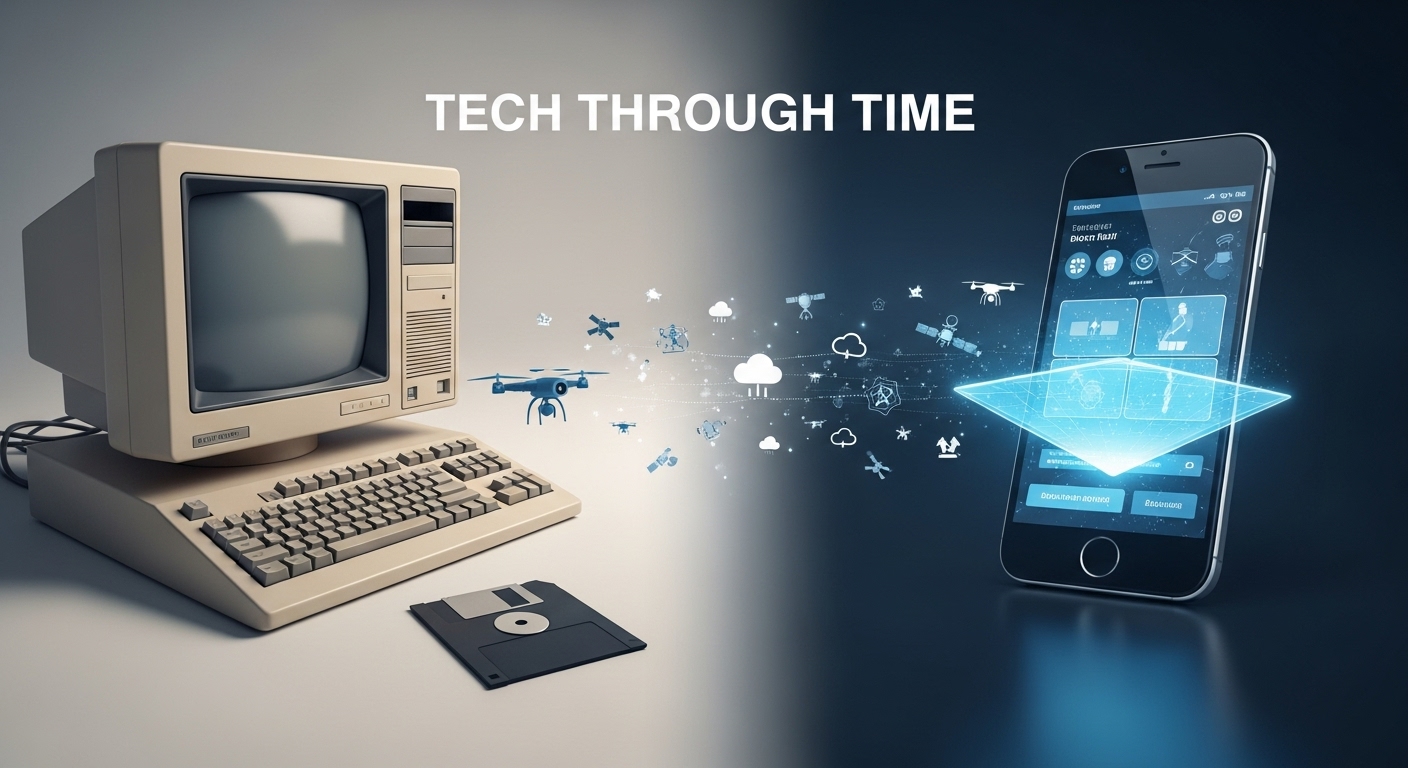
Technology is the backbone of modern society. From the early days of simple tools to today’s advanced digital ecosystems, technology has consistently reshaped human civilization. Every aspect of our daily lives, from communication to transportation, healthcare to entertainment, is influenced by technological advancement. This post explores the evolution, current trends, and future prospects of technology, providing a deep dive into how it impacts society, economy, and culture.
Early Technological Innovations
The history of technology begins with the simplest of tools. Humans initially created tools for hunting, cooking, and shelter. Stone tools, fire, and the wheel were monumental innovations that set the foundation for civilization. These early inventions may seem primitive by today’s standards, but they represent humanity’s first attempts at problem-solving through innovation.
The agricultural revolution, which occurred thousands of years ago, is another key milestone in technology. Tools for farming, irrigation systems, and animal domestication allowed humans to settle in one place and form communities. This period demonstrates how technology not only meets immediate needs but also enables broader societal transformation.
Industrial Revolution and Mechanization
The Industrial Revolution, which began in the late 18th century, marked a significant leap in technological progress. Machines replaced manual labor, revolutionizing manufacturing, transportation, and agriculture. Steam engines, textile machines, and mechanized tools dramatically increased productivity and efficiency.
Railways and steamships changed the way people and goods moved across regions, shrinking the world in terms of distance and time. This era also saw the rise of factories and urbanization. While industrialization brought economic growth, it also introduced challenges such as environmental pollution, labor exploitation, and societal inequality.
The Digital Revolution
The 20th century ushered in the digital revolution, which transformed how humans interact with information. Computers, telecommunications, and the internet became central to modern life. Early computers were massive, room-sized machines, but advancements in microprocessors allowed for the development of personal computers, making computing accessible to the general public.
The internet, which started as a research network, evolved into a global communication platform. Email, instant messaging, and social media have transformed personal communication, while online platforms have redefined commerce, entertainment, and education. Cloud computing has further amplified the power of technology, allowing for storage and computation on an unprecedented scale.
Artificial Intelligence and Machine Learning
Artificial intelligence (AI) represents the cutting edge of technological innovation today. AI systems can analyze vast datasets, recognize patterns, and make predictions that surpass human capabilities in certain areas. Machine learning, a subset of AI, enables systems to improve performance over time without explicit programming.
AI is applied in numerous sectors, including healthcare, finance, logistics, and entertainment. In healthcare, AI aids in disease diagnosis, drug discovery, and personalized treatment. In finance, AI predicts market trends, detects fraud, and optimizes trading strategies. Autonomous vehicles, powered by AI algorithms, promise to redefine transportation, while AI-driven content generation and recommendation engines shape media consumption.
The Internet of Things: A Connected World
The Internet of Things (IoT) is another transformative technological trend. IoT refers to a network of physical devices connected to the internet, capable of collecting and exchanging data. Smart homes, wearable devices, industrial sensors, and connected vehicles are all part of the IoT ecosystem.
IoT enhances convenience, efficiency, and automation. Smart thermostats, for example, learn user preferences and optimize energy usage. In industrial settings, IoT devices monitor machinery, predict failures, and improve productivity. However, the proliferation of connected devices also raises concerns about data privacy, cybersecurity, and infrastructure reliability.
Blockchain Technology and Decentralization
Blockchain technology, originally popularized by cryptocurrencies, has far-reaching applications beyond digital money. A blockchain is a decentralized, distributed ledger that records transactions securely and transparently. Its immutability ensures data integrity, making it useful in finance, supply chain management, voting systems, and more.
Decentralized technologies challenge traditional centralized systems, enabling peer-to-peer interactions without intermediaries. This shift has the potential to redefine trust, governance, and business models, offering new opportunities for innovation while also introducing regulatory and security challenges.
Cybersecurity: Protecting the Digital World
As technology becomes integral to daily life, cybersecurity has emerged as a critical concern. Cyber threats, including malware, ransomware, phishing attacks, and data breaches, jeopardize personal privacy, corporate assets, and national security.
Organizations invest heavily in cybersecurity measures, including firewalls, encryption, intrusion detection systems, and ethical hacking practices. Meanwhile, individuals must adopt safe practices, such as strong passwords, multi-factor authentication, and cautious online behavior. The ongoing battle between cyber attackers and defenders highlights the importance of vigilance in a connected world.
Emerging Technologies Shaping the Future
Several emerging technologies promise to further transform society in the coming years. Quantum computing, for instance, leverages the principles of quantum mechanics to perform calculations at speeds unimaginable with classical computers. This technology could revolutionize cryptography, optimization problems, and scientific research.
Augmented reality (AR) and virtual reality (VR) are reshaping entertainment, education, and training. AR overlays digital information onto the real world, while VR immerses users in fully digital environments. These technologies offer new ways to experience and interact with information.
Biotechnology and genetic engineering also hold tremendous potential. Advances in gene editing, personalized medicine, and synthetic biology could address critical health challenges, improve food production, and even combat climate change.
The Role of Technology in Society
Technology is more than just tools; it is a driver of cultural, social, and economic transformation. Communication platforms enable global connectivity, breaking down geographic and cultural barriers. E-commerce platforms allow small businesses to reach global markets, fostering economic growth.
However, technology also introduces ethical dilemmas. Issues such as AI bias, digital surveillance, data privacy, and job displacement must be carefully managed. Society must balance technological advancement with ethical responsibility, ensuring that innovations benefit humanity as a whole.
Sustainability and Green Technology
Sustainable technology is becoming increasingly important in the context of climate change and environmental degradation. Renewable energy sources, such as solar, wind, and hydropower, reduce dependence on fossil fuels. Energy-efficient devices, electric vehicles, and smart grids contribute to lowering carbon emissions.
Green technology also extends to waste management, water conservation, and sustainable agriculture. Innovations like vertical farming, biodegradable materials, and circular economy models demonstrate how technology can support ecological sustainability while meeting human needs.
Education and Technology Integration
The integration of technology in education has transformed learning experiences. Digital classrooms, e-learning platforms, and interactive simulations provide students with flexible and personalized learning opportunities. Artificial intelligence can tailor content to individual needs, helping learners master concepts more effectively.
Technology also facilitates global knowledge sharing. Students can access online courses from prestigious universities, collaborate with peers worldwide, and engage in virtual research projects. While these tools enhance education, they also require careful management to avoid digital distractions and ensure equitable access.
The Future of Work in a Tech-Driven World
Automation and AI are redefining the workforce. Routine tasks in industries such as manufacturing, logistics, and administration are increasingly handled by machines. This shift necessitates reskilling and upskilling, preparing workers for roles that require creativity, critical thinking, and technological literacy.
Remote work, enabled by digital collaboration tools, has become mainstream. Cloud computing, video conferencing, and project management software allow teams to work from anywhere, reshaping organizational structures and work-life balance. While technology increases efficiency, it also raises questions about job security, mental health, and digital boundaries.
Challenges and Risks in a Technology-Dependent Era
Reliance on technology introduces vulnerabilities. System failures, cyberattacks, and digital misinformation can disrupt society on a large scale. Social media platforms, while connecting people, can amplify misinformation and polarize communities. Ethical concerns around AI decision-making and surveillance require thoughtful regulation and oversight.
Moreover, technology can exacerbate inequality. Access to digital tools, internet connectivity, and technical skills is unevenly distributed, creating a digital divide. Ensuring inclusive access to technology is essential for equitable societal progress.
Conclusion: Technology as a Catalyst for Change
Technology has evolved from simple tools to complex systems that shape nearly every aspect of human life. It offers unprecedented opportunities for progress, creativity, and problem-solving. At the same time, it introduces challenges that require ethical reflection, regulation, and societal engagement.
As we move forward, the key lies in harnessing technology responsibly, fostering innovation while prioritizing human well-being and sustainability. The future of technology is not just about gadgets, software, or machines—it is about creating a world where human potential is amplified, problems are solved efficiently, and society thrives in harmony with technological advancement.
The journey of technology is ongoing, and its impact is only growing. Those who understand and embrace this transformation will not only navigate the challenges of tomorrow but also shape a future that is intelligent, connected, and sustainable.